Students with learning disabilities can achieve academic success through evidence-based teaching strategies that adapt to their unique learning needs. These approaches include breaking complex tasks into smaller steps, using multisensory instruction, and providing consistent one-on-one support that addresses individual learning styles.
Understanding Learning Disabilities and Learning Differences
Learning disabilities affect how the brain processes information, impacting reading comprehension, writing tasks, math problems, and attention span. A Specific Learning Disability is not a reflection of intelligence but rather a difference in how students absorb and demonstrate knowledge.
Common learning disabilities include reading disorders like dyslexia, writing challenges such as dysgraphia, math difficulties known as dyscalculia, and attention deficit hyperactivity disorder that affects focus and executive function.
The U.S. Department of Education estimates that approximately one in five students experiences some form of learning difference during their educational journey.
These learning difficulties manifest differently in each student. Some students struggle with word problems while excelling in visual tasks. Others may have difficulty with reading skills but demonstrate strong verbal abilities. Recognizing that learning differences require personalized approaches is the first step toward helping students succeed.
Breaking Learning into Manageable Chunks
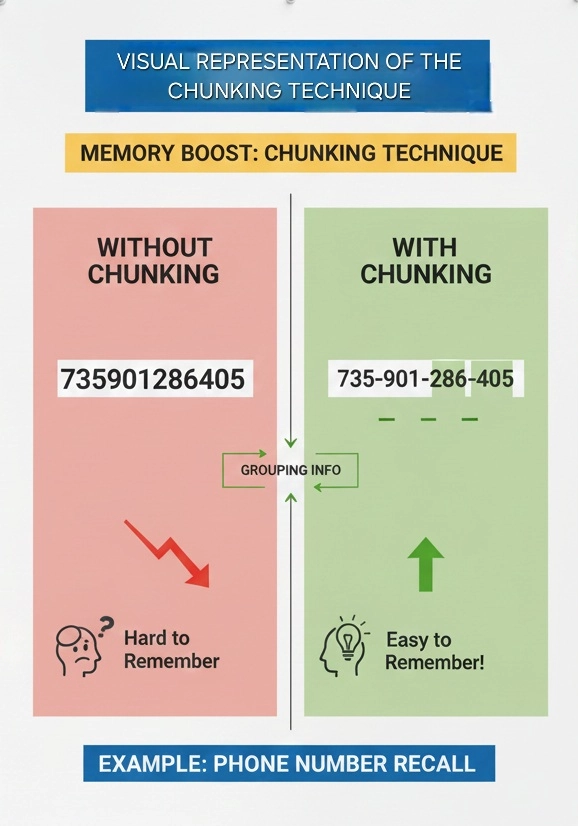
The chunking technique helps students process new material by dividing complex information into smaller, digestible parts. Research shows that working memory can only handle between five and nine pieces of information at once, so breaking down lessons reduces cognitive overload and builds confidence.
Teachers and tutors implement chunking by dividing a chapter into sections with checkpoint questions after each part. For math problems, they separate multi-step equations into individual operations. When introducing new material, they establish connections to background knowledge before advancing to more complex concepts.
This instructional strategy works particularly well in one-on-one settings where tutors can adjust the pace based on student needs. A student working with a specialized tutor might spend an entire session mastering one concept before moving forward, ensuring solid understanding at each stage of the learning process.
Using Multi-Sensory Teaching Approaches
_learning_styles_breakdown_1.webp)
Students with learning disabilities often benefit from instruction that engages multiple senses simultaneously. Multi-sensory teaching creates different pathways in the brain for storing and retrieving information, making learning experiences more memorable and accessible.
Visual learners need graphic organizers, color-coded notes, and diagrams that make abstract concepts concrete. Auditory learners benefit from audiobooks, verbal explanations, and discussion-based lessons. Kinesthetic learners require hands-on activities and movement breaks throughout study sessions.
Effective tutors combine these learning styles during instruction. They might use a virtual whiteboard while explaining concepts aloud and incorporating interactive activities that keep students engaged. This approach addresses diverse learning needs within a single session, maximizing retention and understanding.
Implementing Explicit Instruction and Direct Instruction
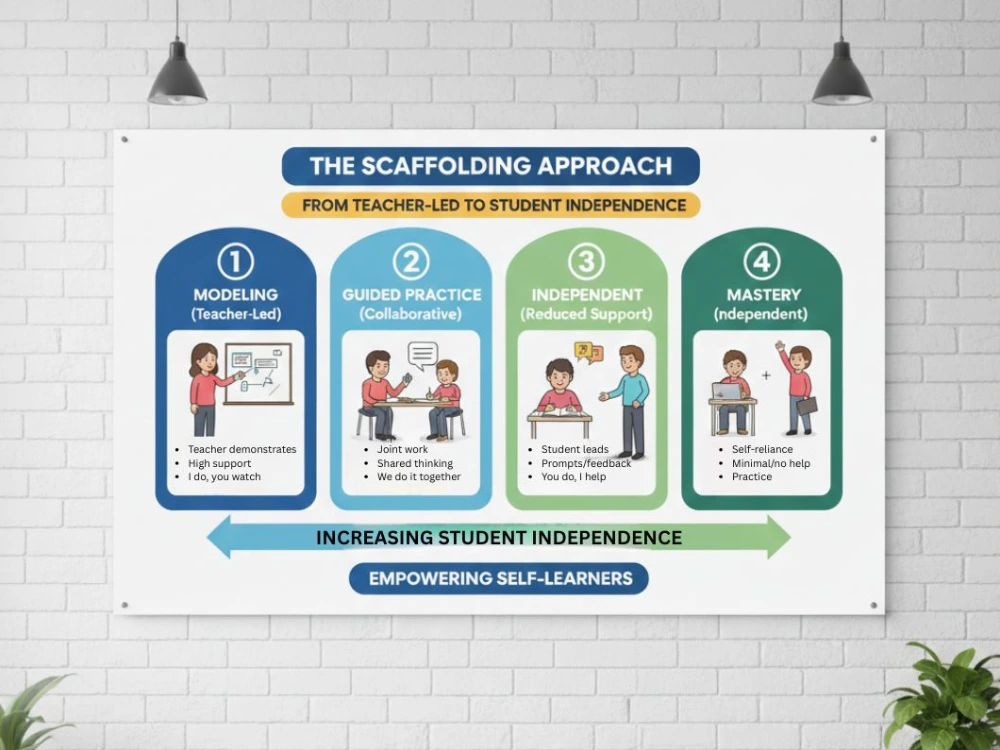
Explicit instruction removes ambiguity from the learning process by clearly modeling each step before students attempt tasks independently. This teaching model follows a structured progression: the instructor demonstrates, practices collaboratively with the student, then monitors as the student works alone.
The Journal of Special Education consistently reports that direct instruction produces significant gains for students with learning disabilities. This method works because it provides clear expectations, immediate feedback, and systematic skill-building that prevents knowledge gaps.
Teaching students with learning disabilities requires this level of clarity and structure to build skills systematically.
Tutors using explicit instruction verbalize their thinking process during demonstrations, showing students exactly how to approach problems. They provide worked examples before assigning practice, ensuring students understand not just what to do but why each step matters. This transparency builds both competence and confidence.
Leveraging Graphic Organizers and Visual Tools
Graphic organizers transform abstract relationships into visual representations that students can see and manipulate. These tools help with planning writing tasks, organizing important information, and understanding connections between concepts.
Different organizers serve different purposes. Mind maps help with brainstorming and generating ideas. Venn diagrams clarify comparisons and contrasts. Flowcharts show sequences and processes. Cause-and-effect organizers make logical relationships visible.
When working with a tutor, students can create shared graphic organizers during sessions, building a visual reference they revisit later. This collaborative process strengthens understanding while creating study materials tailored to each student’s learning objectives.
Providing Frequent Feedback and Assessment
Students with learning disabilities benefit from consistent, specific feedback that highlights progress and addresses misconceptions early. Rather than waiting for formal tests, effective instruction includes frequent informal checks that guide learning without creating anxiety.
Process questions help students develop metacognitive awareness. Asking "How is this strategy working?" or "Where might you apply this approach?" encourages reflection and self-monitoring. This develops the study skills and self-regulation needed for independent learning.
One-on-one tutoring creates ideal conditions for this continuous feedback loop. Unlike classroom instruction, where a general education teacher manages an entire class, individual sessions allow tutors to provide immediate corrections and personalized encouragement after every response.
Building on Student Strengths
Every student possesses unique strengths that can serve as bridges to new learning. Identifying what students do well creates positive momentum and provides entry points for challenging material.
A student who struggles with reading comprehension might excel at visual analysis. A tutor can leverage this strength by introducing complex texts through illustrations and diagrams first, then connecting visual understanding to written content. This approach transforms a weakness into an opportunity.
The growth mindset principle applies here: emphasizing that abilities develop through effort rather than being fixed traits. When students experience success in their strength areas, they build confidence to tackle more difficult tasks with persistence rather than avoidance.
Teaching Study Skills and Time Management Strategies
Executive function challenges often accompany learning disabilities, making organization and time management particularly difficult. Teaching these study strategies explicitly helps students develop independence.
Effective time management strategies include using visual timers to break work into manageable intervals, maintaining assignment calendars that track class assignments with due dates highlighted, and creating consistent study routines.
Many students also benefit from accommodations like extra time on tests, which reduces pressure and allows them to demonstrate their proper understanding. Students learn to estimate how long tasks require and plan accordingly.
Note-taking skills require direct instruction for many students with learning disabilities. A tutor might teach annotation techniques for reading, Cornell notes for lectures, or digital tools that support organization. When students develop these academic skills, they can better manage coursework across all subjects.
Supporting Reading Comprehension and Reading Skills
Reading problems and disabilities affect decoding, fluency, and comprehension, requiring targeted reading instruction that addresses specific challenges. Multi-sensory reading approaches teach phonemic awareness through visual, auditory, and kinesthetic channels simultaneously.
Students benefit from pre-reading strategies that activate background knowledge and establish purpose. During reading, they use text marking to identify key words and important information. Post-reading activities reinforce understanding through discussion and summarization.
For students with significant reading disorders, audiobooks provide access to grade-level content while reading skills continue to develop. Text-to-speech technology allows students to demonstrate knowledge in subjects like science and history without reading barriers limiting their learning.
Specialized reading tutors use evidence-based programs that build skills systematically. They might focus on phonics patterns one session, reading fluency another, and comprehension strategies the following week, always adapting to the student’s pace and needs.
Find a tutor for this topic
Addressing Writing Tasks and the Writing Process
Writing challenges affect many students with learning disabilities, from generating ideas to producing organized text with correct mechanics. Breaking the writing process into distinct stages makes this complex task more manageable.
Prewriting strategies include brainstorming, creating graphic organizers, and discussing ideas verbally before writing. Drafting focuses on getting thoughts down without worrying about perfection. Revising the addresses, content, and organization. Editing tackles grammar and mechanics last.
Allowing students to use a word processor reduces frustration with handwriting and provides spell-check support. Speech-to-text technology lets students whose verbal skills exceed their writing ability express complex ideas. A note taker or scribe might help during the initial learning stages.
Tutors provide scaffolded support throughout the writing process, offering more assistance initially and gradually releasing responsibility as students gain confidence. This individualized pacing is difficult to achieve in classroom instruction but natural in one-on-one sessions.
Adapting Instruction for Different Age Groups
Strategies for students with learning disabilities must evolve as learners progress from elementary school through middle school and beyond. Younger students need concrete, hands-on approaches with frequent breaks and immediate rewards.
In elementary school, instruction emphasizes foundational skills with multi-sensory techniques and positive reinforcement. Students at this grade level benefit from predictable routines and close monitoring.
Middle school students require increasing independence training alongside continued support. Instruction shifts toward study strategies, self-advocacy skills, and organizational systems that will serve them long-term. Older students often benefit from understanding their own learning differences and developing compensatory strategies.
The transition to high school brings greater course load demands and expectations for self-management. Students need support balancing multiple classes, managing due dates, and advocating for accommodations. Tutoring at this stage often combines academic support with executive function coaching.
Creating Supportive Learning Environments
The learning environment significantly impacts student success. Distraction-free spaces with minimal visual and auditory interruptions help students with attention deficit disorder maintain focus during classroom tasks.
Distance learning presents unique challenges and opportunities for students with learning disabilities. Virtual environments allow for customization—students can adjust lighting, reduce background noise, and take movement breaks as needed. However, they require strong self-regulation skills and adult support.
One-on-one online tutoring combines the flexibility of distance learning with personalized attention. Students work in comfortable home environments while receiving expert guidance through video chat, screen sharing, and interactive whiteboards. This setup often reduces the anxiety some students experience in traditional special education classrooms.
Developing Social Skills and Emotional Support
Learning disabilities affect more than academics—they impact self-esteem, peer relationships, and emotional well-being. Students who have a difficult time with academics repeatedly may develop anxiety, avoidance behaviors, or negative self-talk.
Emotional support from caring adults makes a tremendous difference. When tutors and teachers build a positive relationship with students, they create safe spaces for taking risks and making mistakes. This trust allows students to push through challenges rather than giving up.
Social skills instruction might include teaching conversation strategies, perspective-taking, and conflict resolution. For students whose learning differences affect social interaction, explicit instruction in these areas prevents isolation and builds meaningful connections with peers.
Celebrating small wins consistently reinforces the growth mindset and builds resilience. A tutor who notices when a student tries a new strategy, persists through difficulty, or shows improvement in any area provides the encouragement that fuels continued effort.
Working with Special Education Teachers and Programs
Special education programs provide crucial accommodations and modifications through Individualized Education Plans. These formal documents outline specific learning needs and the support services students receive.
The special education teacher serves as a key member of the student’s support team, coordinating services and monitoring progress toward goals. However, classroom-based support may not provide the intensive, individualized instruction some students require for meaningful progress.
Professional development for educators focuses on evidence-based instructional strategies for learning disabilities. Resources like the Journal of Learning Disabilities and Intervention in School and Clinic publish research that guides effective teaching practices. Special educators and general classroom teachers both benefit from staying current with research-backed interventions.
Parents advocating for their children should understand available services and collaborate closely with school teams. Supplementing school-based programs that support students with private tutoring can accelerate progress, particularly when tutors and teachers communicate regularly.
The Advantages of One-on-One Tutoring
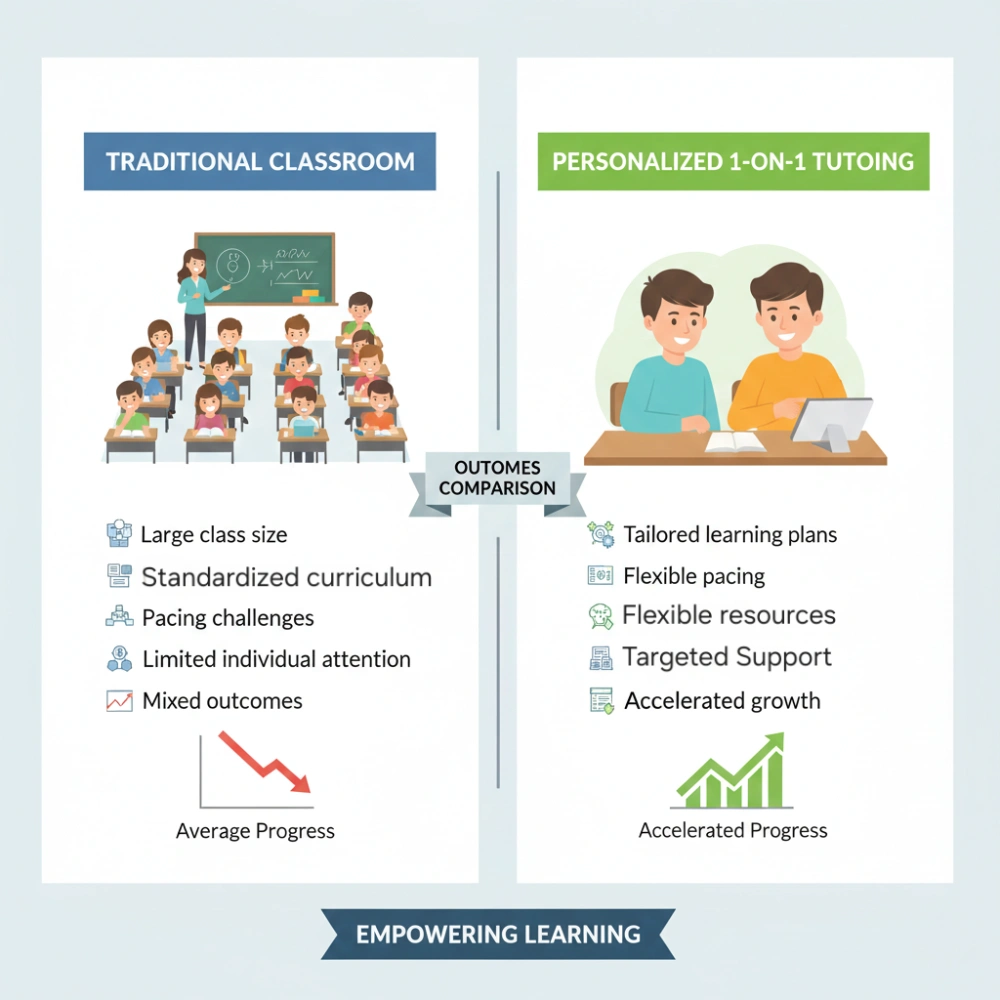
While classroom instruction serves many students well, those with learning disabilities often need the individualized attention that only one-on-one tutoring provides. The entire class format requires teachers to balance diverse learning needs with pacing demands, often leaving struggling students without sufficient support.
Private tutoring offers several distinct advantages. The tutor focuses entirely on one individual student, adapting instruction moment-by-moment based on understanding and engagement. There’s no waiting for help, no comparing progress to peers, and no pressure to keep up with the group of students.
Research consistently shows that intensive, individualized intervention produces the largest gains for students with learning disabilities.
The American Educational Research Association reports that one-on-one instruction allows for immediate error correction, continuous assessment, and relationship-building impossible in larger settings. Case study research consistently demonstrates that students receiving individualized tutoring show accelerated progress compared to classroom-only instruction.
Specialized tutors bring expertise in working with exceptional students who have specific learning disabilities, understanding how dyslexia affects reading instruction differently than dyscalculia impacts math instruction. They select instructional approaches based on each student’s profile rather than following a predetermined curriculum designed for classroom tasks.
Online tutoring platforms now make expert support accessible and affordable. Students connect with experienced tutors globally, finding specialists in their specific needs at rates starting around $7 per hour. Video chat technology enables face-to-face interaction, screen sharing allows collaborative work, and session recording lets students review lessons later.
Many platforms offer free trial lessons, allowing families to find tutors who match their child’s personality and learning style before committing. This compatibility matters tremendously—when students feel understood and supported, they engage more fully in the learning process.
Moving Toward Academic Success
Students with learning disabilities face real challenges, but with appropriate strategies for students with learning disabilities and personalized support, they can achieve their full potential. The most effective approach combines evidence-based teaching strategies with consistent one-on-one guidance from tutors who understand special-needs education and diverse learning requirements.
Success requires patience, persistence, and the right support systems. When students receive instruction tailored to their individual learning styles, frequent feedback on their progress, and emotional encouragement from caring adults, they develop both academic skills and confidence.
The goal extends beyond immediate academic achievement to developing lifelong learning strategies and self-advocacy abilities that lead to career success. Students who understand their learning differences and know which strategies work for them become independent learners who can tackle new challenges throughout their lives.
For families seeking specialized support, exploring tutoring options provides an important complement to classroom instruction. Finding a tutor experienced in learning disabilities who can provide the individualized attention, flexible pacing, and consistent encouragement your child needs might be the turning point in their educational journey.
Anahit Babkenyan
Anahit Babkenyan is a Content writer at Lrnkey.com. Writing enthusiast and travel writer. She is a life-long learner and writes articles with profound research.