Both italki and Cambly are among the most popular platforms for learning English online or picking up a new language — but they work very differently, and choosing the wrong one can mean wasted time and money.
Quick Overview
italki is a global online platform connecting learners with over 30,000 tutors across 150+ languages. Cambly focuses exclusively on learning English through conversation with native speakers, available on demand around the clock.
Their core philosophy is where they diverge most: italki offers a structured, goal-driven learning experience through a mix of certified Professional Teachers and informal Community Tutors. Cambly is built around convenience and casual conversational practice — no scheduling, no lesson plans, just conversation.
Below is a detailed breakdown of both platforms to help you decide which one fits your goals, schedule, and budget.
italki: An Honest Review
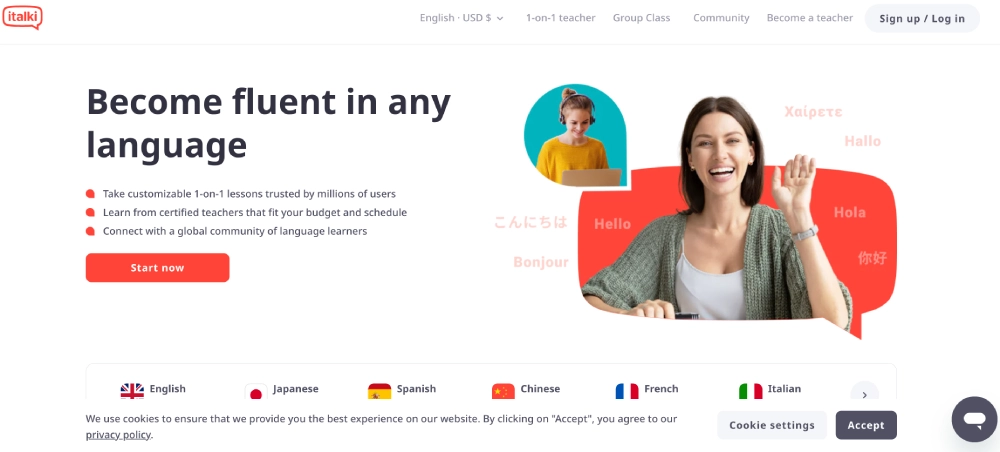
italki launched in 2007 and has grown into one of the largest language learning marketplaces in the world. Whether you’re studying Spanish, Mandarin, Japanese, or working toward fluency in any other language, the platform’s depth of tutor options is hard to match.
How italki Works
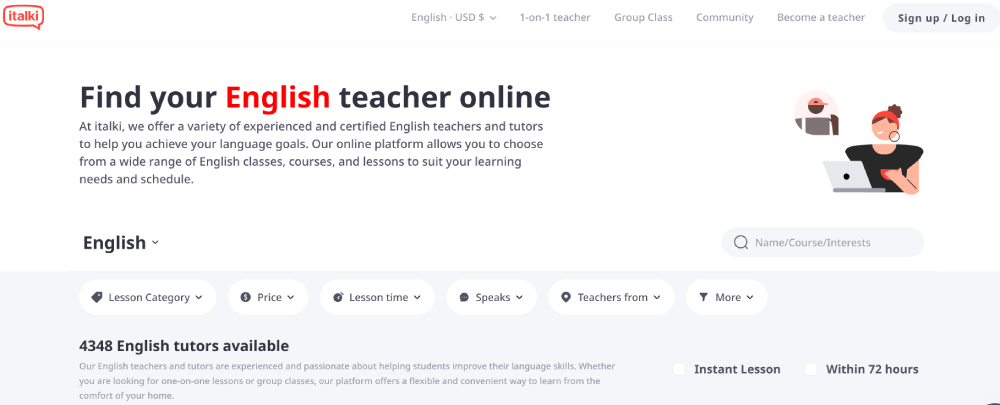
Learners browse tutor profiles, watch introduction videos, read student reviews, and book lessons directly through the platform. Each session takes place via video call — either within the italki Classroom or through a third-party tool like Zoom.
Lesson content is fully flexible. You and your italki teacher can focus on grammar, vocabulary, speaking practice, reading, writing, Business English, exam preparation, or any mix that suits your learning goals.
Tutor Types
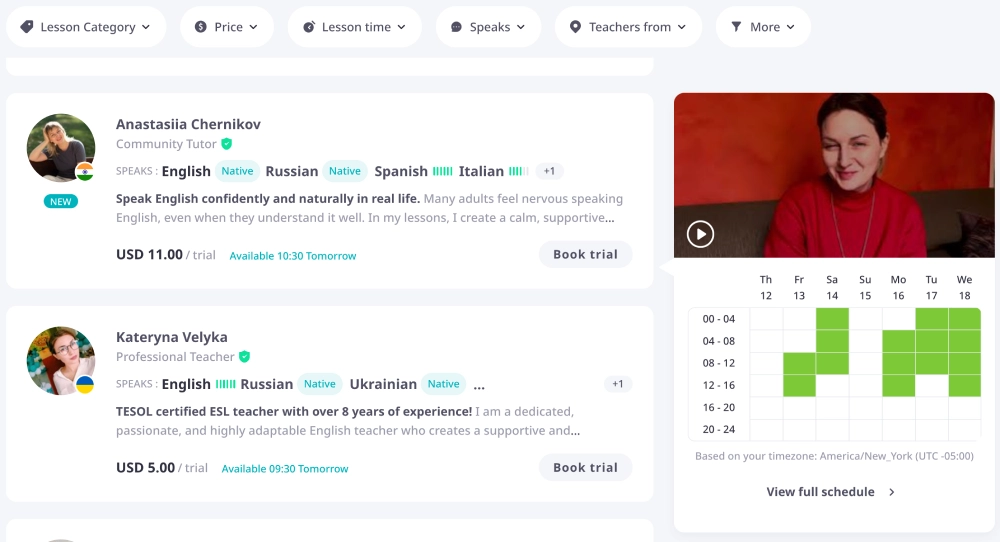
Professional Teachers hold formal teaching certificates — typically a degree in education, a TEFL/CELTA qualification, or equivalent. As a professional tutor, they create structured lesson plans and are best suited for learners who want measurable, accountable progress.
Community Tutors are native or fluent speakers without formal teaching qualifications. Sessions tend to be more relaxed and conversational — a lower-cost option for building speaking confidence.
italki also offers small group classes for select languages, which can be a cost-effective way to practice with peers while still working with a structured language teacher.
Pricing
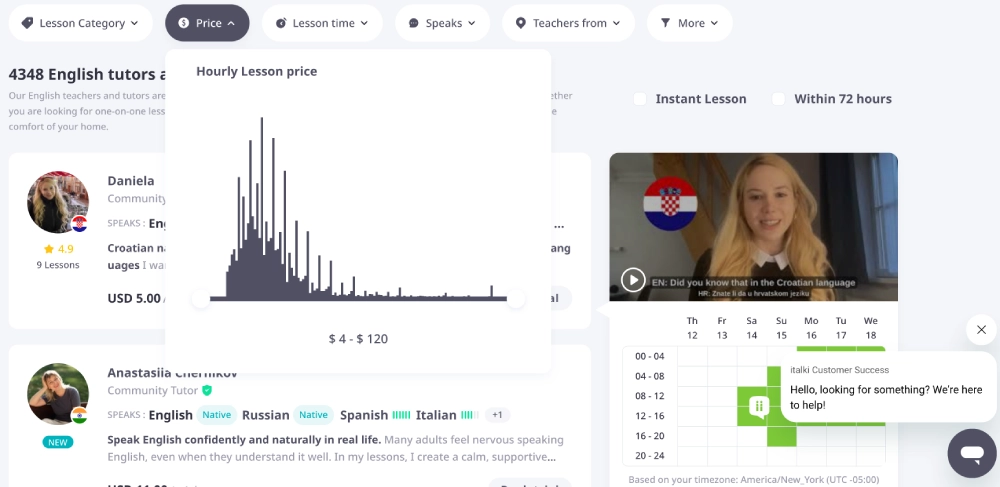
italki uses a pay-per-lesson model. Tutors set their own rates, typically ranging from $4 to $30/hr for Community Tutors and $15 to $80/hr for Professional Teachers. You buy credits in advance and spend them only when you book. Most tutors offer a discounted first lesson.
Key Features
- 150+ languages available
- Discounted trial lessons with most tutors
- Built-in scheduling, messaging, and video calling
- Community features: writing corrections, language challenge forum, pronunciation practice
- italki Plus: supplementary AI-powered study tools
- Small group classes for select languages
- Mobile app available (iOS and Android)
Pros & Limitations
|
✅ Pros
|
⚠️ Limitations
|
- Wide language options — 150+ languages
- Certified teachers with verified teaching certificates
- Structured lessons tailored to your specific goals
- Pay only for lessons you actually book
- Strong exam prep (IELTS, TOEFL, DELF, HSK)
- Small group classes available for popular languages
- Solid community features for self-study
|
- Tutor quality varies — especially among Community Tutors
- No guaranteed lesson structure; depends on the individual teacher
- Limited built-in progress tracking
- A large tutor pool can feel overwhelming to navigate
|
Cambly: An Honest Review
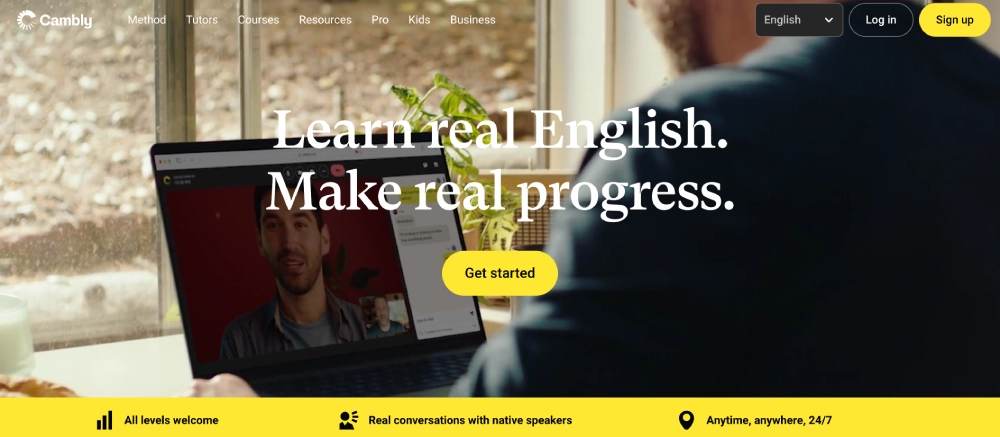
Cambly launched in 2012 with a clear and narrow focus: help people learning English get instant access to native speakers for conversation practice, any time of day. It’s particularly popular with learners in Asia and Latin America who want to practice spoken English with tutors from the United States, the UK, and other English-speaking countries.
It doesn’t try to be a full language learning platform — and that focus is both its strength and its limitation.
How Cambly Works
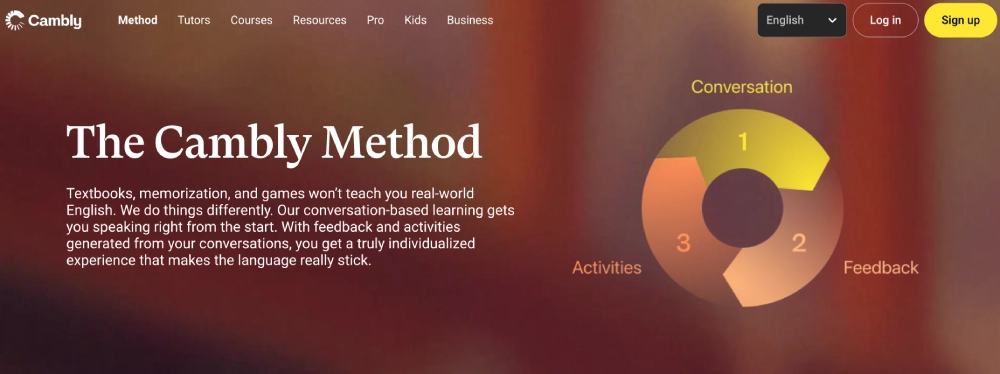
Cambly operates on a subscription model. After selecting a plan, learners can request an instant video chat with an available tutor or schedule sessions in advance. There’s no waiting — if a tutor is online, you connect immediately.
Most sessions are unstructured conversations. Tutors can use Cambly’s pre-made curriculum slides as a loose guide, but there’s no formal lesson plan unless you bring your own agenda.
Tutor Types
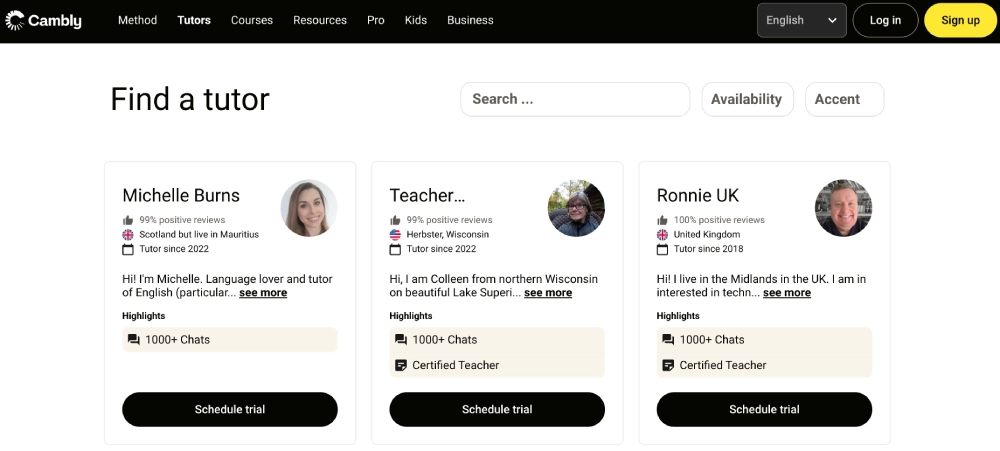
All Cambly tutors are native speakers of English — primarily from the United States, Canada, the UK, and Australia. The platform has no formal requirements around credentials or teaching experience; anyone who wants to teach English online can apply.
This keeps supply high and wait times short, but it also means the pool of language teachers on Cambly varies widely. There’s no guaranteed standard for high-quality instruction — consistency depends entirely on the individual tutor you choose.
Cambly Kids is a separate program for children aged 4–15, with tutors specifically selected for working with younger learners.
Pricing
Cambly charges a flat subscription fee based on lesson frequency. Plans range from roughly $12 to $60 per month. You pay whether or not you use your sessions. Annual plans include a discount of around 25%.
Key Features
- Instant access to available tutors — no scheduling required
- Lesson recordings are saved automatically
- Community features: chat transcripts, lesson history, topic starter library
- Speaking practice via structured topic prompts and curriculum slides (optional)
- Cambly Kids for ages 4–15
- Mobile app available (iOS and Android)
- Available 24/7
Pros & Limitations
|
✅ Pros
|
⚠️ Limitations
|
- Truly on-demand — connect instantly at any hour
- No scheduling stress; works well for unpredictable routines
- Lesson recordings let you review sessions later
- Great for building speaking confidence through daily practice
- Cambly Kids is a solid option for younger English learners
- Simple, low-friction interface
|
- English only — no foreign language support
- No teaching certificate requirements for tutors
- Subscription charges even when you skip sessions
- Limited support for exam prep or structured learning goals
- Tutor quality and teaching style can vary significantly
|
italki vs Cambly: Side-by-Side Comparison
|
Feature
|
italki
|
Cambly
|
|
Languages
|
150+ languages (foreign language support)
|
English only
|
|
Tutor types
|
Professional Teachers + Community Tutors
|
Native English speakers (no certification required)
|
|
Lesson structure
|
Structured or conversational — tutor’s choice
|
Conversational/casual, minimal structure
|
|
Pricing model
|
Pay-per-lesson; tutors set their own rates
|
Weekly/monthly subscription
|
|
Price range
|
$4–$80/hr
|
$12–$60/mo depending on plan
|
|
Free trial
|
Discounted trial lesson available
|
No formal free trial
|
|
Exam prep
|
IELTS, TOEFL, DELF, HSK, and more
|
Basic exam prep only
|
|
Small group classes
|
Available for select languages
|
Not available
|
|
Lesson recordings
|
Available
|
Available
|
|
Mobile app
|
Yes
|
Yes
|
|
Progress tracking
|
Limited built-in tracking
|
Lesson history + recordings
|
|
Community features
|
Writing corrections, practice forum, and language challenges
|
Chat transcripts, lesson history
|
|
Best fits
|
Multi-language learners, exam prep, beginners, professional tutor seekers
|
English conversation, on-demand access
|
Key Differences Worth Knowing

Language Options
This is the most fundamental difference between the two platforms. italki supports 150+ languages — from widely studied ones like Spanish and French to less common foreign language options like Swahili, Welsh, or Tagalog. Cambly is English-only. If your goal extends beyond English, Cambly is simply not an option.
Lesson Style and Learning Experience
italki’s core strength is adaptability to your learning style. You can choose a certified Professional Teacher who builds a structured curriculum around your goals, or a Community Tutor for affordable, relaxed conversation. Either way, the platform supports the development of a broad range of language skills — grammar, vocabulary, reading, writing, and speaking.
Cambly’s approach is more focused. Sessions are almost entirely built around speaking practice and developing conversational skills. This works well for intermediate or advanced learners who already understand grammar basics and want to build fluency through consistent, low-pressure conversation. It’s a great way to gain speaking confidence — but less effective if you’re starting from scratch or chasing a specific learning goal.
Tutor Quality and Certification
When comparing the pool of English tutors on each platform, the difference is structural. italki lets you filter for Professional Teachers with verifiable teaching certificates — so if you want certified teachers who plan your lessons and track your progress, they’re findable. Cambly makes no such distinction; every tutor is a native speaker, but teaching ability and lesson quality vary widely.
On both platforms, reading student reviews and booking a trial session is the best way to assess whether a specific tutor is the right fit before committing.
Exam Preparation
For learners working toward a recognized English language qualification — IELTS, TOEFL, Cambridge B2/C1, or similar — italki is the significantly stronger platform. Many of its Professional Teachers specialize in exam preparation and can design lesson plans around the specific format, timing, and requirements of your target exam.
Cambly offers some pre-made exam prep topic slides, but this isn’t its core purpose. Learners relying on Cambly for exam prep alone are likely to find the experience insufficient.
Who Should Choose italki?
italki tends to be the right platform if:
- You’re learning a foreign language other than English
- You’re a beginner who needs structure and clear language skills progression
- You’re preparing for a language exam (IELTS, TOEFL, DELF, HSK, etc.)
- You want a certified teacher who builds real lesson plans around your goals
- You prefer a pay-per-lesson model over a monthly subscription
- Your learning style is goal-oriented rather than conversational
Who Should Choose Cambly?
Cambly tends to be the right platform if:
- You’re an intermediate or advanced English learner focused on conversational skills and speaking fluency
- You want on-demand access without scheduling — your learning style is flexible and self-directed
- You have an unpredictable schedule and value the ability to connect instantly
- You want consistent speaking practice with native speakers from the United States or other English-speaking countries
- You have a child aged 4–15 who needs English conversation practice (Cambly Kids)
Looking for an Alternative to Both?
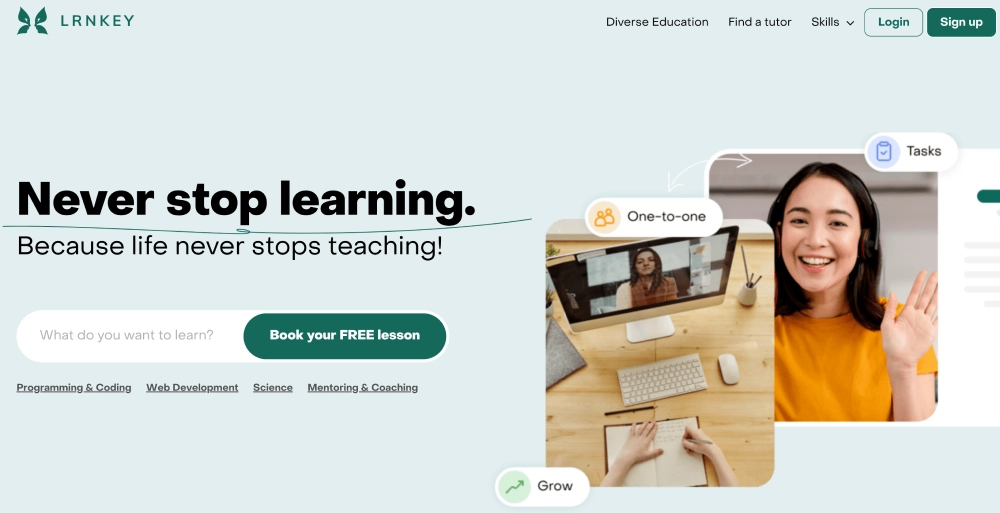
If neither platform quite fits — perhaps you want more accountability than Cambly provides, or a more personal experience than you’ve had on italki — it’s worth taking a look at LRNkEY, a 1-on-1 tutoring platform for language learners with vetted, experienced tutors.
A few things that set it apart:
- English tutors and language tutors are community-vetted with verified profiles, intro videos, and authentic student reviews
- Every tutor — whether a professional tutor or an experienced conversationalist — offers a free trial lesson with no credit card required
- Pay-per-lesson model with rates from $7/hr
- Tutors create personalized lesson plans around your specific goals, whether that’s conversational English, exam preparation, or Spanish tutoring.
It won’t be the right platform for everyone — but if structured, goal-focused lessons with an experienced language tutor matter to you, it’s a platform worth a look. You can browse language tutors on LRNKEY and try a session before committing to anything.
Final Thoughts
Both italki and Cambly are solid, popular platforms — but they serve genuinely different needs.
italki is the stronger choice for learners who want language variety, certified teachers, structured lesson plans, and serious exam preparation. Cambly is the best way to build English speaking confidence through convenient, on-demand conversations with native speakers — as long as you don’t need formal instruction.
Neither platform is universally better. The right platform depends entirely on your current level, your goals, and your learning style. Understanding that difference is the best way to make a confident, well-informed choice when learning English online.