Preply and Cambly are two of the most recognized names in online language learning — but they serve very different learning needs and are built around opposite ideas of what effective language classes should look like.
Quick Overview
| |
Preply
|
Cambly
|
|
Best for
|
Structured learning across 90+ languages
|
On-demand English conversation practice
|
|
Pricing
|
From ~$10/hr, pay per lesson
|
Subscription from ~$14/month
|
|
Tutor pool
|
40,000+ language tutors
|
Native English speakers
|
|
Lesson structure
|
Full lesson plans, progress tracking
|
Casual conversation only
|
|
Trial lesson
|
Yes — discounted, with a refund option
|
No
|
|
Languages
|
90+
|
English only
|
What Is Preply?
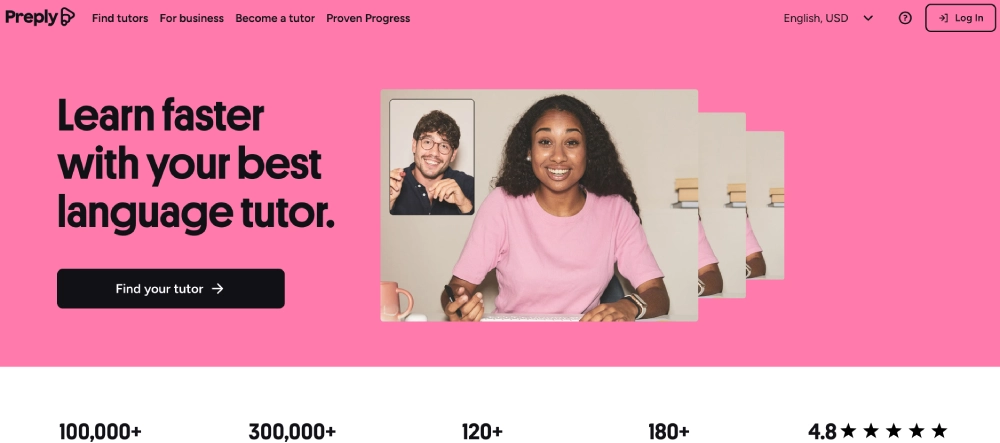
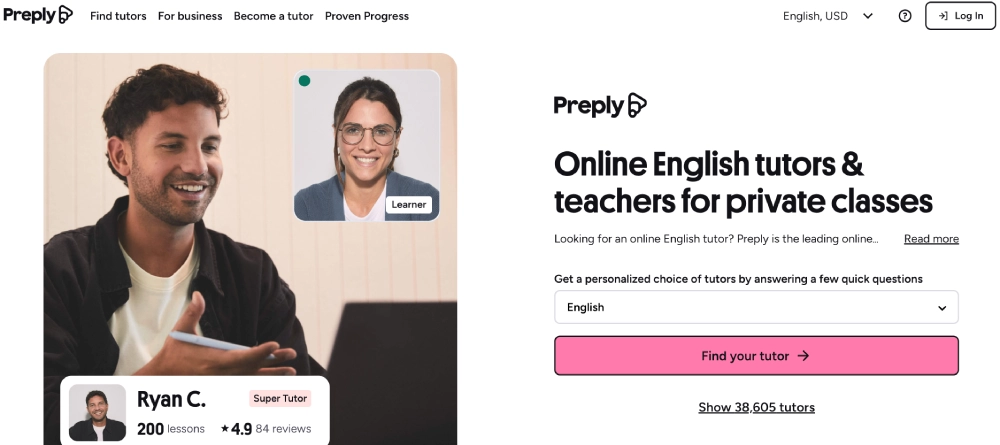
Preply is a tutoring marketplace and one of the most established language learning platforms currently available for private lessons online. It connects learners with over 40,000 language tutors across more than 90 languages — from Spanish and French to Arabic, Japanese, and Mandarin.
The platform is built around structured, goal-oriented learning. When you join, you browse language teachers filtered by language, price, availability, and teaching style. Each profile includes a video introduction, qualifications, verified student reviews, and a detailed account of their teaching experience.
You book a trial lesson first to see if it’s the right tutor for your learning style — and if it isn’t, Preply offers a replacement session or a refund.
Key Features
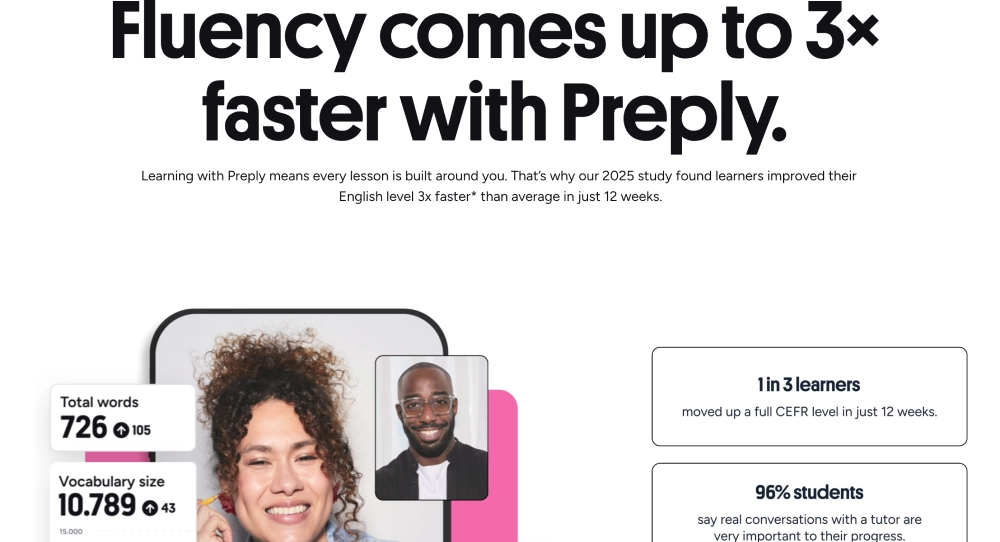
Preply’s standout strength is its classroom environment. Tutors build personalized lesson plans, assign homework, and track your progress session by session. The integrated interactive whiteboard supports real-time annotation, and file sharing allows tutors to send study materials — vocabulary lists, grammar exercises, writing practice sheets — directly within the lesson.
A progress dashboard tracks vocabulary, grammar, and lesson frequency, giving both student and tutor a clear picture of the learning journey. Preply also supports a broad range of language courses, from conversational practice through to advanced academic preparation, making it one of the more complete sets of learning tools available on a single language learning platform.
For learners with specific goals — an exam, a job-related requirement, a move abroad — this structure makes a meaningful difference. Each Preply tutor operates more like a professional English teacher or specialist language instructor than a conversation partner: private lessons are intentional, cumulative, and adapted to your specific needs session by session.
Pricing
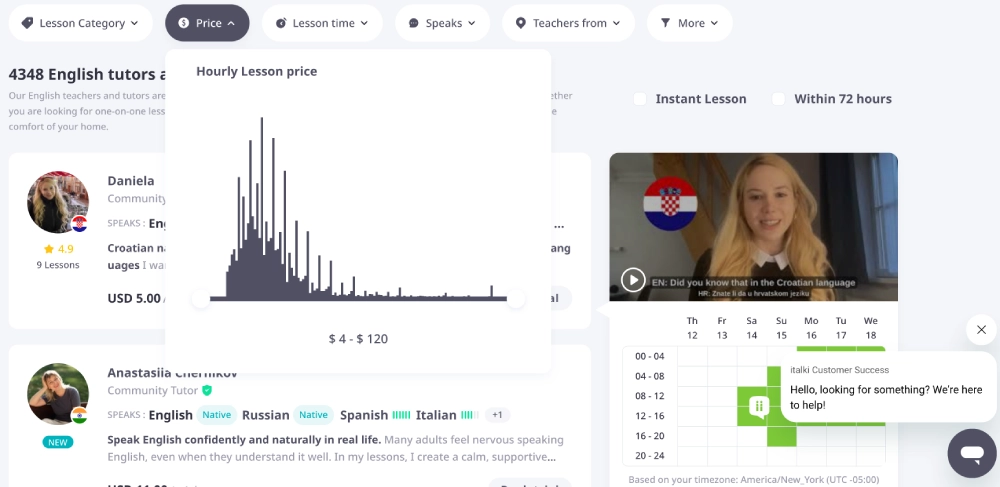
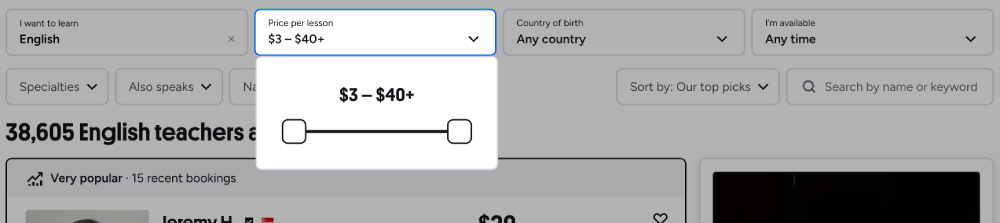
Tutors on Preply set their own rates, typically ranging from $10 to $65+ per hour, depending on qualifications and demand. There are no subscription plans — you pay per lesson or in lesson packages. Most tutors offer a discounted first session, and Preply’s refund policy is among the most learner-friendly across major online platforms.
Pros
- 90+ languages with a wide range of tutor specializations
- Structured lesson plans, progress tracking, file sharing, and writing practice tools
- Tutors function as professional teachers with access to full learning resources
- Detailed profiles help learners find the best teachers for their specific learning style
- Suitable for exam preparation, business communication, and academic language courses
- Pay-per-lesson flexibility — no subscripti
Cons
- Scheduling is required — no instant access to tutors
- Tutor quality varies; results depend on choosing the right Preply tutor carefully
- Unpaid trial lessons affect some tutors’ initial engagement
- Cancellation windows are strict — late changes may still incur a charge
What Is Cambly?
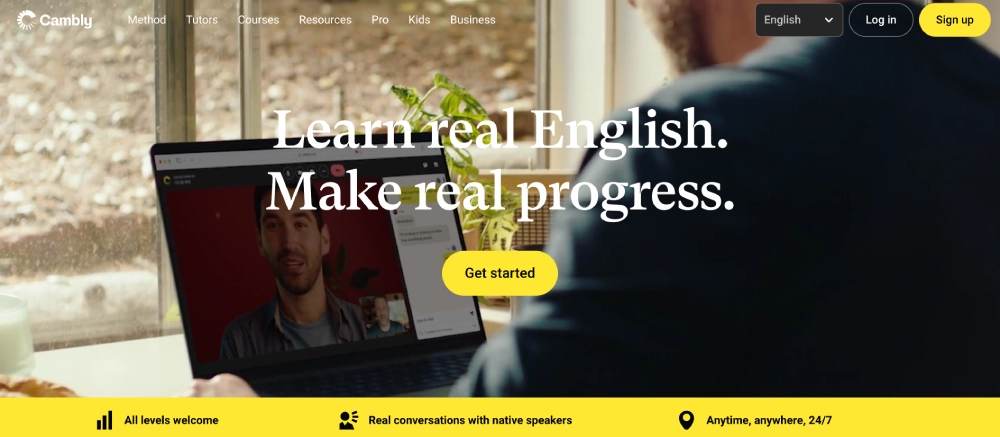
Cambly is an on-demand English speaking platform that connects learners with native English speakers via real-time video call — instantly, without booking. The experience is built around one idea: remove every barrier between a learner and a native speaker.
Cambly offers a deliberately simple experience. There are no formal lesson plans for adult learners, no structured learning plans, and no progress tracking. It is designed for spontaneous conversations in English, not for learners pursuing structured language lessons, academic courses, or specific proficiency targets in any English language skill area.
Key Features
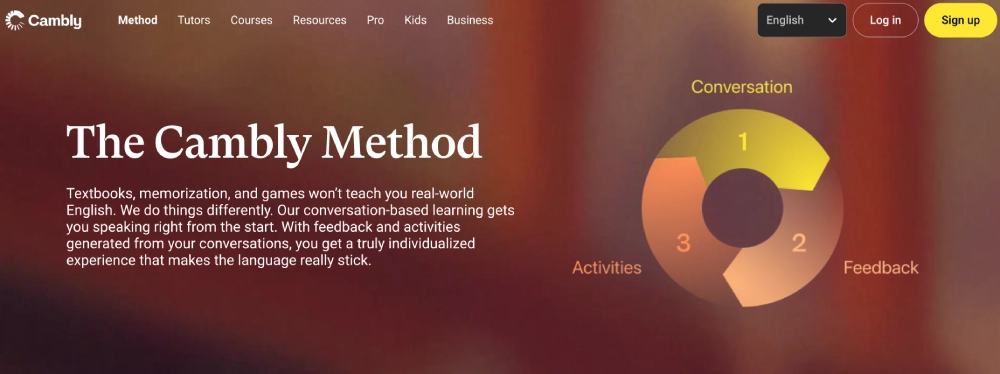
The experience Cambly offers centers on immediacy and ease of access. All you need is a stable internet connection and a device with a camera. Sessions are recorded automatically, so learners can review American English pronunciation and phrasing or revisit new vocabulary after the call.
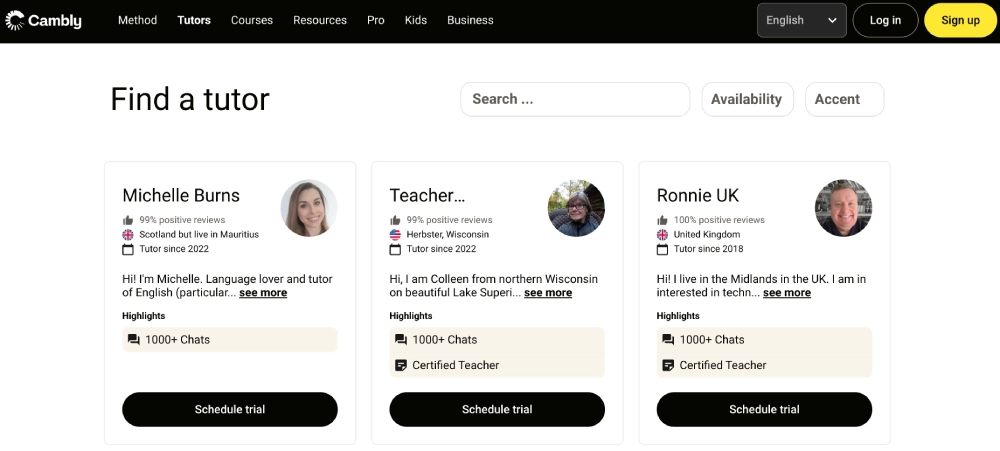
Tutors — referred to on the platform simply as English tutors — are browsed by personality tags, accent, and availability. Cambly Kids provides a separate learning environment for children aged 4–15, with language teachers experienced in working with younger learners.
For adult learners, the learning tools are intentionally minimal. There are no private lessons in the traditional sense, no online courses, and no structured agenda — no learning resources sent ahead of time. Sessions are open-ended conversations, and the depth you get depends largely on who you’re matched with and how the call unfolds.
Pricing
Cambly operates entirely on a subscription model. Plans are priced by weekly minutes:
- 15 min/week: $14–17/month
- 30 min/week: $28–35/month
- Unlimited daily access: $150–180+/month
All English tutors cost the same regardless of teaching experience or qualifications — there are no per-lesson options or lesson packages. Unused minutes don’t roll over, and Cambly’s refund policy is strict, making it difficult to recover payment for unused subscription time.
Pros
- Instant access — no scheduling or booking required
- Native speakers of American English and other varieties are available around the clock
- Session recordings support informal self-review
- Simple interface with minimal setup
- Cambly Kids is a practical option for young English learners
- Fixed subscription pricing suits consistent daily users
- Good for spontaneous conversations that build speaking comfort quickly
Cons
- English only — not usable for learning any language beyond English
- No lesson plans, progress tracking, or structured language course for adults
- Tutor vetting is limited; teaching style and experience vary considerably
- Subscription model loses value quickly for irregular users
- No file sharing, whiteboard, or in-lesson learning resources
- Not suitable for exam preparation, academic subjects, or professional language goals
- Strict refund policy with no rollover for unused time
Side-by-Side Comparison
|
Feature
|
Preply
|
Cambly
|
|
Languages
|
90+
|
English only
|
|
Tutor pool
|
40,000+
|
Not disclosed
|
|
Pricing model
|
Pay per lesson/package
|
Subscription (weekly minutes)
|
|
Starting price
|
~$10/hr
|
~$14/month (15 min/week)
|
|
Trial lesson
|
Discounted + refund option
|
No trial
|
|
Private lessons
|
Yes — structured 1-on-1
|
Conversation only
|
|
Lesson plans
|
Yes
|
No
|
|
Study materials/learning resources
|
Yes — in-lesson file sharing
|
No
|
|
Progress tracking
|
Yes
|
No
|
|
Interactive whiteboard
|
Yes
|
No
|
|
Language courses
|
Yes
|
No
|
|
Writing practice
|
Yes
|
No
|
|
Academic subjects
|
Yes
|
No
|
|
Exam preparation
|
Yes
|
Not suitable
|
|
Booking required
|
Yes
|
Optional (instant connect)
|
|
Tutor qualifications visible
|
Yes — detailed profiles
|
Limited
|
|
Business English
|
Yes
|
Limited
|
|
Spontaneous conversations
|
Available with some tutors
|
Core feature
|
|
Children’s platform
|
No dedicated product
|
Cambly Kids (ages 4–15)
|
|
Small groups
|
Available with some tutors
|
No
|
|
Refund policy
|
Replacement or refund
|
Strict; minimal refunds
|
The Key Differences That Actually Matter
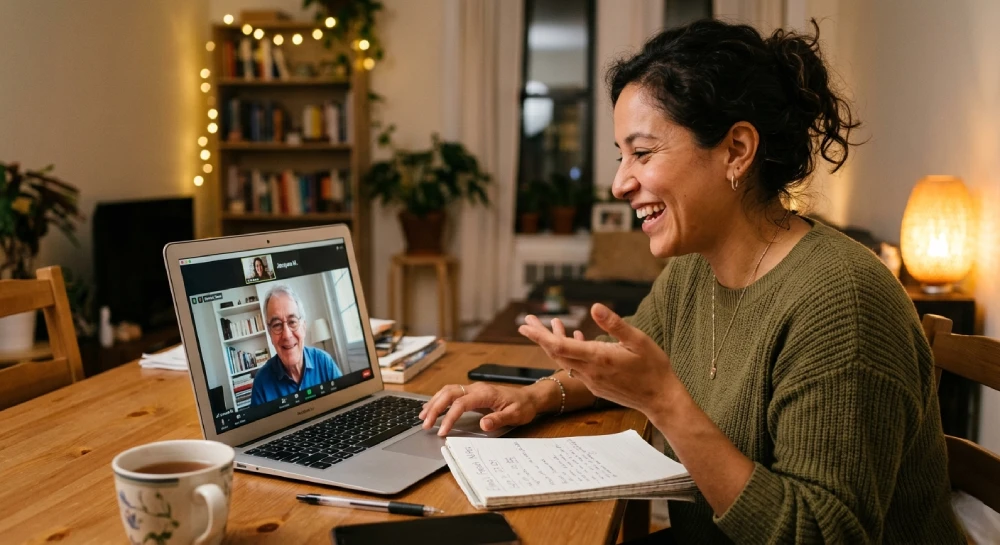
Learning Experience and Structure
The gap between these two platforms is most visible here. Preply is designed for learners who want private lessons that build toward something.
Language teachers on Preply function as professional instructors — they assess your level, align lessons with your specific goals, prepare learning resources ahead of each session, and design a language course that progresses over time. Each lesson connects to the one before.
Cambly’s approach is almost the opposite. Its value lies in access and spontaneity, not structure. The platform is built for spontaneous conversations — quick, unscripted English exchanges that help learners build comfort with the spoken English language in low-stakes situations.
For someone whose only goal is to get more relaxed speaking English with native speakers, Cambly removes every friction point. But for learners following defined learning paths or working toward measurable outcomes, the platform offers no scaffolding to get there.
Tutor Quality and Professional Standards
Preply attracts some of the best teachers in online language education — qualified professional instructors with formal certifications (TEFL, CELTA, university degrees in linguistics or education) alongside community tutors with strong language backgrounds.
Credentials, specialties, and hundreds of verified student reviews are visible on every profile. This transparency helps learners match their specific needs to a tutor whose approach fits — whether that’s strict grammar correction, immersive conversation, or structured writing practice.
On Cambly, all English tutors are native or near-native speakers, but the barrier to entry is lower than on most platforms in this category. Teaching style and experience vary considerably.
It’s also worth noting that income potential for Cambly tutors is among the lowest in the major language learning services — around $10/hour before fees — which affects which professional teachers choose to remain active on the platform long-term, and in turn affects the consistency of the learning experience available to students.
Private Lessons vs. Conversation Access
This distinction is fundamental to choosing between the two. Preply is built around structured private lessons: each session has an agenda, uses study materials prepared by the tutor, follows a lesson plan, and contributes to a longer learning arc. Learners receive homework, corrections, and targeted feedback.
Cambly is built around spontaneous conversations. Sessions have no predetermined agenda — you connect, you talk, and the direction is largely up to whoever you’re speaking with. For learners who freeze in unscripted English language situations, this open format can genuinely help.
For learners who need to track progress, build specific skills, or prepare for a formal assessment, the lack of structure is a real limitation.
Communication Skills, Writing Practice, and Learning Resources
Preply supports the full range of language skills. Tutors prepare and share learning resources before sessions, assign writing practice for homework, correct grammar in structured exercises, and build lessons around communication skills for professional or academic contexts.
Cambly focuses exclusively on spoken English. There are no learning resources, no writing component, and no grammar correction built into the platform. For learners whose primary gap is spoken English fluency in informal settings, this is workable.
For anyone whose specific needs include written communication, structured vocabulary building, or preparation for a formal examination, Cambly doesn’t cover it.
Pricing in Practice
Preply’s per-lesson model rewards flexibility. Learners can adjust their lesson frequency based on schedule or budget, pause between sessions without losing money, and switch language tutors without penalty beyond the cancellation window.
Cambly’s subscription plans require consistent weekly use to justify the cost. For daily learners, the subscription math works reasonably well. For anyone with a variable schedule, unused minutes disappear — and getting a meaningful refund mid-cycle is genuinely difficult. Compared to most competing platforms in this space, Cambly’s refund terms are notably rigid.
Limitations Worth Knowing
Neither platform is without meaningful constraints. Preply’s main friction is setup time — vetting and selecting the right match from a large tutor pool requires more effort than instant-access services.
For Cambly, the limitation is scope: it cannot support structured language lessons in any language other than English, any academic or professional preparation goal, or learners whose specific needs extend beyond spontaneous conversations in English. Both platforms also lack community features for those who benefit from learning alongside others in small groups.
Which Platform Is the Better Fit?

Choose Preply if:
- You are learning a language other than English
- You have specific goals — an exam, a professional milestone, a target level
- You want structured private lessons with lesson plans, study materials, and accountability
- You need writing practice, exam preparation, or a formal language course
- Pricing flexibility matters — you want to pay only for lessons you actually take
Choose Cambly if:
- English is your only target language
- You want instant, low-pressure, spontaneous conversations with native speakers
- Your schedule is unpredictable, and booking ahead doesn’t suit you
- You are a beginner, building basic confidence in spoken American English
- You are looking for a children’s English language platform (Cambly Kids)
Deciding on the best platform comes down to one question: do you need structure, or do you need access? For most learners with specific needs and measurable language goals, Preply offers a more complete set of learning tools. For those who want English conversation on demand and nothing more, Cambly delivers exactly what it promises.
A Note on Alternatives
If neither platform quite fits — whether because of pricing, language range, or the level of structure you need — there are other options worth considering.
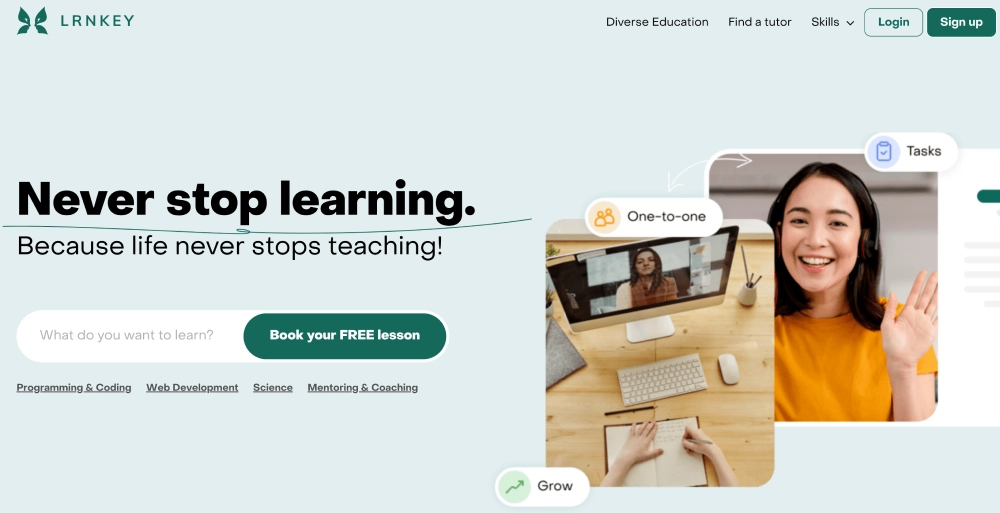
LRNKEY is an online tutoring platform offering 1-on-1 private lessons with experienced language tutors starting from $7 per hour. There’s no subscription required, a free first lesson is included, and tutors have verified profiles with student reviews.
The platform takes a lower commission than most comparable services, which tends to attract language teachers who stay longer and invest more consistently in each student’s progress.
For learners who want the depth of Preply’s structured private lessons at a more accessible price point, or who prefer a less crowded platform for one-on-one English tutoring, it’s a practical option to consider alongside the two reviewed here.
Frequently Asked Questions
Is Preply or Cambly better for learning English?
For structured English learning with lesson plans, learning resources, and progress tracking, Preply is the stronger choice. For instance, informal spontaneous conversations with native speakers, such as those on Cambly, are more accessible, though they offer fewer learning tools and no formal curriculum.
Does Cambly provide lesson plans or learning resources?
No. Cambly is a conversation platform only. There are no lesson plans, no learning resources, and no structured language lessons for adult learners. Preply tutors, by contrast, prepare study materials and build lesson plans ahead of each private lesson.
Can I take structured private lessons on either platform?
Preply is built for private lessons — tutors design a progressive sequence of language lessons aligned to your goals, with study materials and homework included. Cambly does not offer structured private lessons; it provides on-demand English conversation only.
Is Cambly’s subscription worth the cost?
Only if you use it consistently every week. Unused minutes are lost, and refunds are difficult to obtain. For learners with variable schedules, the subscription model carries real financial risk.
Which platform has the best teachers for exam preparation?
Preply, clearly. Many of its best teachers specialize in IELTS, TOEFL, Cambridge, and other exams, and build lesson plans specifically around those targets. Cambly has no structured curriculum and is not appropriate for exam-focused study.
What’s the main limitation of Cambly for serious language learners?
Cambly is built for spontaneous conversations in English only. There are no lesson plans, no learning resources, no language course structure, and no progress tracking. It suits casual speaking practice — not learners with specific goals, professional language needs, or structured learning objectives.
Other Tutoring Platform Comparisons
We also researched, compared and published the italki VS Preply comparison.